




.By Wachuku Emeka Donald – W.E.D.
B.Sc. (Political Science) | M.Sc. (International Relations) | Ph.D. (Diplomatic. Studies. I.V.) | Ph.D. (Hon.)
August 2026
Beyond the Presidency:
There are political leaders whose relevance is largely defined by the office they occupy. Their influence rises with political power and diminishes when they leave government.
There is, however, another category of leaders, one whose significance becomes clearer with distance from office. Such leaders may initially be judged through the narrow lens of partisan politics, but time, experience and subsequent conduct can compel history to reconsider them.
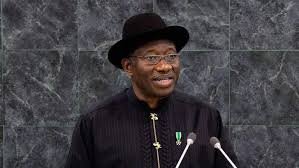
Goodluck Ebele Jonathan, GCFR, increasingly belongs to this latter category.
To examine Jonathan merely as the President of Nigeria between 2010 and 2015 is, in my considered view, to examine only one chapter of a much larger political biography.
His story encompasses an unusual ascent from a relatively modest background into Nigeria’s highest political office.
The circumstances surrounding his emergence as Vice-President, Acting President and subsequently President, the achievements and shortcomings of his administration, the formidable security and governance challenges he confronted, his defeat at the 2015 presidential election, his decision to concede and peacefully transfer power, and perhaps most significantly, his transformation over the subsequent eleven years into a continental advocate of democratic governance, mediation and peace.
That transformation deserves intellectual attention. The question is no longer simply “How successful was Jonathan as President?”
The more profound question is:
What did eleven years outside presidential power do to Goodluck Jonathan as a leader?
My assessment is that the years after Aso Rock may have produced a Jonathan who is more experienced, more reflective, more internationally connected and potentially more politically formidable than the man Nigerians knew when he first assumed the presidency.
This is not an argument for political nostalgia. Neither is it an attempt to present Jonathan as flawless.
It is an argument for historical reassessment.
- THE MAKING OF GOODLUCK JONATHAN
Goodluck Ebele Jonathan was born on 20 November 1957 in Otuoke, in present-day Bayelsa State. His background is significant because Jonathan did not emerge from the conventional mould of Nigeria’s old political aristocracy. His formative years were shaped more by education and professional development than by the cultivation of a national political machine.
He studied Zoology at the University of Port Harcourt and proceeded to postgraduate studies, eventually obtaining a doctorate. Before becoming a major political figure, he worked in professional and public-sector environments. That background helps explain an important feature of his political personality.
President Jonathan was not originally constructed as a political strongman. He was not known for the kind of combative political style associated with some Nigerian power brokers. His public persona was generally restrained, conversational and conciliatory.
His political journey took him through Bayelsa State politics, where he became Deputy Governor and later Governor, before his elevation to the national stage as Vice-President under President Umaru Musa Yar’Adua.
Circumstances surrounding Yar’Adua’s illness subsequently placed Jonathan in the position of Acting President. Following Yar’Adua’s death in 2010, he became President of the Federal Republic of Nigeria. The extraordinary nature of this ascent is central to understanding the man.
President Jonathan did not spend his entire political life openly preparing for the presidency.
The presidency came to him through a combination of political opportunity, constitutional circumstance and historical contingency. That experience shaped his leadership.
- THE PRESIDENTIAL OFFICE HE INHERITED
President Jonathan assumed the presidency at a particularly difficult moment in Nigeria’s national development.
The country was confronting multiple structural and political challenges simultaneously, ranging from: inadequate electricity generation and distribution;
infrastructure deficits;
unemployment and underemployment;
widespread poverty;
heavy dependence on petroleum revenues;
corruption and institutional weaknesses;
ethnic and religious tensions;
political competition;
and the increasingly dangerous Boko Haram insurgency.
Consequently, President Jonathan’s presidency cannot reasonably be examined outside its national context. But context should never become an excuse.
A responsible historical assessment must do two things simultaneously:
recognise the difficulties a leader inherited, while holding that leader accountable for how those difficulties were managed.
That is the standard by which I believe Jonathan should be judged.
- THE TRANSFORMATION AGENDA AND THE SEARCH FOR STRUCTURAL CHANGE
President Jonathan’s administration sought to organise its development programme around the Transformation Agenda.
Its broad ambition was to accelerate economic diversification, improve infrastructure, expand productive capacity and strengthen sectors capable of reducing Nigeria’s excessive dependence on crude oil.
Agriculture, electricity, transportation, entrepreneurship, infrastructure and economic management became important areas of intervention.
What deserves attention is that some of these initiatives were not merely about constructing physical projects. They represented attempts to alter how government functioned. That distinction is frequently lost in political debate.
Development is not simply the construction of roads and buildings. It also involves reforming systems, institutions and processes that determine whether those investments produce lasting benefits. President Jonathan’s administration attempted some of those structural interventions.
Some succeeded. Some produced mixed outcomes. Others did not go far enough. But the reform ambition should not be ignored.
- AGRICULTURAL TRANSFORMATION, FROM SUBSISTENCE TO PRODUCTIVITY
Agriculture was one of the areas in which the Jonathan administration demonstrated substantial policy ambition. Nigeria possessed enormous agricultural potential, yet agriculture remained constrained by low productivity, inadequate financing, poor infrastructure, weak value chains and inefficient distribution systems. The Agricultural Transformation Agenda attempted to reposition agriculture as a commercially productive component of the Nigerian economy. One notable innovation was the electronic distribution of agricultural inputs.
The idea was to reduce dependence on intermediaries and limit the diversion of fertiliser and other inputs intended for farmers.
The policy represented more than administrative modernisation.
It reflected an important principle:
technology can be used to reduce opportunities for bureaucratic leakage and bring government intervention closer to intended beneficiaries.
The broader agricultural strategy also encouraged private-sector participation and investment.
For me, the significance of the policy lies not merely in the number of farmers reached. It lies in the attempt to redefine agriculture as an economic industry rather than merely a social welfare constituency. Nigeria still needs that conceptual shift.
- THE POWER SECTOR: COURAGEOUS REFORM, INCOMPLETE OUTCOME
One of Jonathan’s most consequential economic decisions was the restructuring and privatisation of electricity generation and distribution. The administration completed the privatisation process in 2013, transferring generation and distribution assets into private ownership.
The World Bank recorded the transaction as involving five generation companies and ten distribution companies, with proceeds of approximately $2.25 billion. This was a politically significant decision.
For decades, Nigeria had attempted to address electricity problems primarily through state ownership.
Jonathan’s administration essentially acknowledged that the existing model was inadequate and sought to introduce greater private-sector participation.
But the subsequent performance of the electricity sector demonstrated an equally important lesson:
privatisation is not synonymous with reform completion.
Generation remained constrained by gas supply and infrastructure limitations. Transmission weaknesses persisted. Distribution companies encountered financial and operational challenges. Regulatory and investment problems remained.My assessment is therefore balanced.
President Goodluck Jonathan GCFR deserves credit for making a difficult structural decision. But the reform required stronger institutional foundations, better regulation, improved transmission capacity, reliable gas supply and deeper financial restructuring.
The lesson extends beyond Jonathan. A bold policy decision is only as successful as the institutional ecosystem built around it.
- RAILWAYS AND THE RETURN OF LONG-TERM INFRASTRUCTURE THINKING
The revival of Nigeria’s railway system represents another significant dimension of the Jonathan era. The Abuja–Kaduna railway project was initiated during his administration and subsequently completed and commissioned under the succeeding government.
This is precisely where Nigerian political discourse requires greater maturity.
Infrastructure should not be treated as the private property of whichever administration happens to commission it. Major national infrastructure projects frequently span several administrations.
The appropriate question is therefore:
Who conceived it? Who financed it? Who implemented it? Who completed it? and What institutional decisions made it possible?
President Jonathan’s administration contributed to the revival of modern railway development, alongside other interventions involving roads, airports and transportation infrastructure. The broader significance was the re-emergence of an understanding that Nigeria requires multimodal transportation infrastructure. A country of Nigeria’s geographical scale cannot depend indefinitely on roads alone.
Rail, roads, ports, airports and inland waterways must eventually function as components of a coherent national logistics architecture. Jonathan’s administration contributed to that strategic direction.
- THE 2014 GDP REBASING: STATISTICS AS AN INSTRUMENT OF GOVERNANCE
The 2014 rebasing of Nigeria’s Gross Domestic Product was one of the most internationally visible economic developments of the President Jonathan years.
Nigeria updated its economic base year and incorporated economic activities that had previously been inadequately captured. The result was a dramatic increase in the measured size of the Nigerian economy.
Nigeria consequently emerged as Africa’s largest economy by nominal GDP at the time. But serious analysis requires a distinction that political rhetoric often ignores. GDP rebasing did not make Nigerian households suddenly 80 percent wealthier.
Rather, it produced a more contemporary statistical representation of the Nigerian economy. It brought sectors such as telecommunications, entertainment, financial services and other modern economic activities more appropriately into national accounts. That distinction is essential.
President Jonathan’s government deserves credit for completing the statistical exercise. But the exercise should be understood as an improvement in measurement, not as an overnight transformation in living standards. For policymakers, however, accurate measurement matters enormously.
A country cannot effectively plan what it cannot properly measure.
- YOUTH ENTREPRENEURSHIP AND THE SEARCH FOR AN ALTERNATIVE TO GOVERNMENT JOBS
Nigeria’s youth population represents one of the country’s greatest assets and potentially one of its greatest vulnerabilities. President Jonathan’s administration recognised the danger posed by youth unemployment and introduced programmes such as YouWin!, designed to support entrepreneurship among young Nigerians. The underlying philosophy was significant.
Nigeria could never solve youth unemployment simply by making government the largest employer.
A sustainable economy must create conditions under which young people can establish businesses, employ others and participate in productive economic activity.
This was the logic behind entrepreneurship-focused interventions.
The SURE-P programme reflected the government’s attempt to redirect savings associated with fuel-subsidy reform toward infrastructure and social interventions. SURE-P subsequently attracted criticism over implementation, transparency and administration.
Nevertheless, the underlying policy question remains highly relevant:
How can Nigeria transform public resources from short-term consumption into long-term productive capacity? Nigeria is still wrestling with precisely that question.
- THE FUEL-SUBSIDY CRISIS: THE COST OF DIFFICULT REFORM
Jonathan’s attempt to remove or substantially reform fuel subsidies demonstrated another dimension of his presidency. The January 2012 subsidy removal generated enormous public opposition and widespread protests. The government subsequently moderated the extent of the initial policy in response to public resistance. The episode revealed a fundamental challenge in Nigerian governance.
Economic reform is not merely an arithmetic exercise. It is also a question of: public trust; social protection; timing; communication;
sequencing; and political legitimacy.
A technically rational policy can fail politically if citizens believe the burden is unfairly distributed.
Jonathan’s experience offered a valuable lesson for subsequent administrations. Economic reform without social cushioning and effective communication can quickly become a crisis of legitimacy.
- SECURITY: THE MOST SERIOUS WEAKNESS OF THE JONATHAN PRESIDENCY
No serious assessment of President Jonathan’s presidency can avoid the Boko Haram crisis.
This was arguably the most consequential failure of the administration. The insurgency expanded dramatically during his tenure, culminating in the horrific abduction of the Chibok schoolgirls in April 2014. The international reaction demonstrated the magnitude of the crisis. More damagingly, the government’s initial response was widely perceived as slow and insufficiently reassuring.
The crisis exposed weaknesses not only within the political leadership but also within Nigeria’s wider security architecture.
Questions emerged regarding:
intelligence coordination;
military preparedness;
equipment; institutional corruption;
civil-military relations; crisis communication; and the capacity of government to protect vulnerable communities.
Jonathan’s administration subsequently intensified international cooperation and military operations. But political leadership is often judged not only by eventual response, but by timeliness. In my assessment, the Boko Haram crisis remains the most difficult part of Jonathan’s presidential record to defend.
- CORRUPTION: THE PROBLEM OF GOVERNANCE, PERCEPTION AND CONTROL
Another major challenge was corruption. The Jonathan administration became associated with numerous allegations involving public funds, petroleum revenues, procurement and the conduct of government officials.
It is important not to convert every allegation into established fact.
But politics operates on more than courtroom verdicts. It also operates on public confidence.
Jonathan faced a persistent perception that he did not always exercise sufficient control over the political and bureaucratic networks surrounding his presidency.
That perception was damaging.
This distinction is important:
A leader may personally appear modest, restrained or personally decent while presiding over institutions that are perceived to be poorly controlled.
Presidential leadership therefore requires more than personal character. It requires:
institutional discipline, accountability mechanisms, supervision and consequences.
This is one of the enduring lessons of the Jonathan presidency.
- THE PROBLEM OF POLITICAL TEMPERAMENT
President Jonathan’s temperament was one of his greatest strengths and one of his most consequential vulnerabilities.
He was generally conciliatory.
He preferred negotiation.
He often sought accommodation.
He was not naturally inclined toward political confrontation.
In another environment, these qualities might be regarded almost entirely as virtues.
Nigeria’s political environment, however, often rewards leaders who are capable of confrontation and rapid political decision-making.
Jonathan sometimes appeared reluctant to confront powerful interests directly.
I would therefore not describe his weakness simply as cowardice or lack of courage.
That would be too simplistic.
A more accurate description, in my view, is that he sometimes lacked the political ruthlessness and instinctive command discipline necessary to manage Nigeria’s highly competitive political environment.
There is a difference between courage and ruthlessness.
Jonathan possessed moments of considerable courage.
What he did not always possess was the appetite for political combat required to impose his will consistently.
- COMMUNICATION: THE UNFINISHED BATTLE
One of the most important lessons of the Jonathan years concerns political communication.
Governments do not govern in a vacuum. They govern in an environment shaped by:
public perception; social media;
traditional media; opposition narratives; civil society;
international opinion;
and increasingly sophisticated political messaging.
Jonathan’s administration often struggled to explain itself effectively. Some achievements were poorly communicated.
Some failures were inadequately addressed. Some crises were allowed to develop narratives that became difficult for government to reverse.
The consequence was a widening gap between the administration’s understanding of its own performance and the public’s perception of that performance.
That was politically costly.
Leadership therefore requires not only doing the right things.
It requires explaining, defending and transparently accounting for those actions.
- 2015: THE DEFEAT THAT CHANGED THE MEANING OF HIS PRESIDENCY
The 2015 presidential election is perhaps the most important event in Jonathan’s political biography.
He lost to Muhammadu Buhari.
But the significance of the event lies less in the loss than in what followed. Jonathan conceded.
He accepted the electoral outcome and facilitated a peaceful transfer of presidential power. This was historically important.
Nigeria’s democratic history had been marked by coups, contested elections, political violence and struggles over political succession.
Jonathan demonstrated that an incumbent could lose a presidential election without turning the country into the battlefield of personal political survival. That, in my view, was an act of democratic courage.
The 2015 transition helped reinforce a principle that Nigeria desperately needed:
Political office is temporary; the Nigerian state is permanent.
A president does not own the presidency.
A political party does not own Nigeria.
And electoral defeat should not automatically become a national emergency.
Jonathan’s concession helped establish that principle in practice.
- HOW JONATHAN LOST AND WHY HISTORY MAY REMEMBER IT AS A VICTORY
There is an extraordinary irony in Jonathan’s political career.
He lost the presidency.
Yet the manner in which he lost contributed significantly to his subsequent international reputation.
The event that partisan politics initially interpreted as defeat became part of the foundation of his statesmanship.
The 2025 Sunhak Peace Prize Founders’ Award recognised Jonathan for his contribution to democratic development and peaceful transitions of power. The award was presented in Seoul on 11 April 2025.
That development illustrates a profound truth about political history:
contemporary politics often judges events according to immediate winners and losers; history sometimes judges them according to long-term consequences.
By that measure, Jonathan’s concession deserves serious historical consideration.
- THE SECOND JONATHAN: ELEVEN YEARS OUTSIDE ASO ROCK
The most fascinating chapter of Jonathan’s political life may have begun after he left office.
More than eleven years outside the presidency is enough time for a politician to become politically irrelevant.
Jonathan instead developed another sphere of influence.
He increasingly became involved in:
democratic governance; election observation; peace building;
mediation; reconciliation;
leadership development;
and African political dialogue.
The Goodluck Jonathan Foundation became an important institutional vehicle for this work.
In 2024, the Foundation entered into a Memorandum of Understanding with the United Nations Development Programme focused on sustainable peace, democratic governance, preventive diplomacy, leadership development and peaceful electoral processes in West and Central Africa.
This was significant.
Jonathan’s influence increasingly shifted from executive authority to institutional and diplomatic authority.
- FROM PRESIDENT TO MEDIATOR
A president commands.
A mediator persuades.
A president can issue instructions.
A mediator must create incentives for opposing parties to listen.
A president operates through formal constitutional authority.
A mediator operates largely through credibility, relationships, patience and judgement.
Jonathan’s involvement in African mediation demonstrates this transformation. In the Mali crisis, ECOWAS formally identified him as its Special Envoy and Mediator to Mali. This represented a remarkable reversal. The man who had once been criticised over Nigeria’s own political and electoral challenges was being trusted to assist another African country through political crisis.
That requires a completely different skill set.
It requires listening.
It requires neutrality or at least the credible appearance of fairness.
It requires understanding competing interests.
It requires knowing when to compromise and when compromise becomes dangerous.
And it requires the ability to persuade people who have no constitutional obligation to obey you.
That is statesmanship of a different kind.
- THE AFRICAN STATESMAN
Jonathan’s international profile has consequently moved beyond Nigeria. The Sunhak Peace Prize Foundation describes him as a leader who contributed to democratic development and peace governance in Africa, highlighting his peaceful transfer of power and subsequent mediation efforts in West Africa and the Sahel.
The significance of this development should not be underestimated.
President Goodluck Jonathan is increasingly being judged not simply as a former Nigerian president, but as an African elder statesman. That transition is perhaps the greatest transformation of his public identity.
- THE JONATHAN PARADOX
There is a fascinating paradox at the centre of Jonathan’s political evolution. The qualities that sometimes appeared to weaken him as a president have become valuable assets in his post-presidential career.
His willingness to listen has become an instrument of mediation.
His preference for dialogue has become a diplomatic resource.
His tolerance for opposing views has become useful in reconciliation.
His experience of electoral defeat has become a source of credibility in democratic transition.
His former executive authority has become diplomatic capital.
And his distance from day-to-day partisan politics has given him greater room to speak as an elder statesman.
This is why I believe the Jonathan of today must be analysed separately from the Jonathan of 2010–2015.
- THE OLDER JONATHAN: AGE, EXPERIENCE AND PERSPECTIVE
The passage of time changes political leaders. Jonathan has now had more than a decade to observe Nigeria without occupying the presidential seat. He has watched subsequent governments confront many of the same problems that existed before his administration.
He has witnessed political transitions. He has observed the evolution of Nigeria’s democratic institutions. He has seen military interventions return in parts of West Africa. He has watched insecurity challenge regional stability. He has observed the changing relationship between democracy, military power, economic pressure and popular dissatisfaction across Africa.
That is a different kind of political education.
A sitting president learns from governing.
A former president who spends eleven years observing governments can learn from governing, losing power and watching others govern.
That combination is rare.
- FROM LUCK TO JUDGEMENT
There is an interesting philosophical dimension to Jonathan’s political journey.
His early rise appeared heavily influenced by circumstance.
But his post-presidential career has been increasingly defined by choice.
He chose reconciliation.
He chose mediation.
He chose democratic advocacy.
He chose international engagement.
He chose institution-building.
He chose not to spend the entirety of his post-presidential life consumed by political resentment.
That is important.
Luck can put a person in office. Experience determines what that person becomes after leaving office.
President Jonathan’s political biography therefore appears to have moved from one defined partly by circumstance to one increasingly defined by judgement.
- IS THE PRESENT JONATHAN MORE DECISIVE?
This is where I believe the discussion becomes particularly interesting. I would not claim, without qualification, that President Jonathan has transformed into an entirely different personality. But I believe there is reasonable evidence that experience has strengthened his political judgement. Mediation is not weakness. Dialogue is not indecision. Patience is not passivity. Indeed, effective mediation requires considerable decisiveness.
A mediator must determine:
what can be compromised;
what cannot be compromised;
when to apply pressure;
when to withdraw pressure;
when to listen;
when to speak;
and when an agreement has become sufficiently viable to support.
That requires judgement.
Jonathan’s increasing involvement in African peace and democratic processes suggests that his understanding of political power has matured. Perhaps the more decisive leader is not always the loudest man in the room. Perhaps he is the man who knows when a decision must be made and when dialogue is itself the decision.
- EXPERIENCE WITHOUT OFFICE: THE POLITICAL ASSET FEW POSSESS
Today, President Goodluck Ebele Jonathan GCFR possesses a remarkable combination of experiences. He has been:
Governor;
Vice-President;
Acting President;
President;
Commander-in-Chief;
incumbent candidate;
defeated candidate;
peaceful former president;
election observer;
mediator;
peace advocate;
and African elder statesman.
He has experienced both sides of political power. He knows what it means to possess authority.
He knows what it means to lose it.
He understands political competition from inside the presidency. He understands opposition from the perspective of an incumbent who was defeated.
He understands the psychology of political transition. And he has spent more than eleven years outside the machinery of government. That is a formidable political education.
- THE 2025 SUNHAK RECOGNITION AND THE INTERNATIONAL JUDGEMENT
The 2025 Sunhak Peace Prize Founders’ Award is particularly significant because it demonstrates how Jonathan’s international legacy is being constructed. The Foundation recognised him for democratic development and peaceful transfer of power.
In his acceptance remarks, President Jonathan framed the recognition within a broader commitment to peace, democracy, dialogue and good governance in Africa. Whether one agrees with every aspect of the international assessment or not, the development is historically noteworthy.
A former Nigerian president who was once intensely criticised over his administration’s political and security record is now being recognised internationally for democratic transition and peacebuilding. That is an extraordinary evolution of reputation.
- WHAT SHOULD PRESIDENT JONATHAN REGRET?
A mature assessment should permit the possibility of regret.
President Jonathan’s greatest regrets may not necessarily concern losing the 2015 election. A more meaningful area of reflection may involve the opportunities that existed to govern more decisively.
Could the Boko Haram crisis have been confronted more rapidly?
Could the presidency have exercised tighter control over political and bureaucratic networks?
Could corruption allegations have been confronted more aggressively?
Could government communication have been substantially better?
Could major reforms have been supported by stronger institutions?
Could political relationships have been managed more strategically?
These are legitimate questions.
But they are also lessons that extend beyond Jonathan. Every Nigerian president should study the experience.
- WHAT JONATHAN’S PRESIDENCY TEACHES NIGERIA
The Jonathan years provide several enduring governance lessons.
First: Personal character is not enough.
A leader must construct institutions that can survive individual weaknesses.
Second: Reform requires implementation capacity.
A good policy without strong institutions may produce disappointing outcomes.
Third: Security requires anticipation.
Government must respond to threats before they become existential crises.
Fourth: Communication is part of governance.
Citizens must understand what government is doing and why.
Fifth: Political power must have limits.
The 2015 transition demonstrated the importance of accepting electoral defeat.
Sixth: Infrastructure requires continuity.
National projects should not be destroyed or renamed simply because administrations change.
Seventh: Democratic legitimacy is more valuable than temporary political victory.
A leader may lose an election and still make a historic contribution to the country.
- THE GREAT PARADOX OF HIS LEGACY
Jonathan’s legacy contains an irony that deserves serious reflection.
The most controversial part of his presidency was arguably the manner in which his administration handled some of Nigeria’s most difficult crises. Yet one of his most enduring international achievements came from the manner in which he handled the ultimate political crisis, losing power.
That distinction is profound.
Many leaders know how to win.
Fewer know how to govern.
Fewer still know how to lose with dignity. And fewer again can transform defeat into a platform for statesmanship. Jonathan has done the latter.
- THE MAN WHO GREW AFTER POWER
I believe the most interesting President Goodluck Jonathan is not necessarily the president Nigerians knew between 2010 and 2015.
It is the man who emerged afterwards.
Power can distort judgement.
Office can create insulation.
Political advisers can create echo chambers. Partisanship can make leaders see every criticism as hostility. Leaving office removes much of that machinery.
Jonathan has had eleven years to observe Nigeria from outside the presidential system. That distance may have produced something invaluable, perspective.
He has seen how succeeding administrations behave.
He has observed what happens when political promises meet institutional constraints.
He has watched Nigeria’s challenges persist beyond individual presidents.
That can produce humility.
It can also produce strategic clarity.
- JONATHAN AS A POLITICAL FIGURE TO WATCH
When I say that Jonathan is a man to watch, I do not necessarily mean that he will seek elective office again. That would be speculation.
My argument is broader. President Goodluck Ebele Jonathan possesses an unusual combination of:
national political experience;
presidential experience;
international diplomatic exposure;
African networks;
mediation experience;
electoral knowledge;
peacebuilding credentials;
institutional platforms;
and the perspective that comes from more than eleven years outside executive power.
Such a figure cannot reasonably be excluded from serious discussions about Nigeria’s political future.
Whether he ultimately plays a direct political role, remains primarily a mediator, or continues his work as an African elder statesman, his voice will likely remain consequential.
- POLITICIAN OR STATESMAN?
This may ultimately be the most important question.
What separates a politician from a statesman?
A politician is primarily concerned with acquiring and maintaining power.
A statesman becomes increasingly concerned with what happens to society beyond the immediate political contest.
President Jonathan’s trajectory increasingly resembles a movement from one category toward the other. His defeat did not destroy him. It broadened him.
His former office did not become the end of his relevance. It became the foundation for another kind of influence. His political experience became diplomatic capital.
His former opponents became part of the historical context from which his later statesmanship emerged.
And his willingness to engage rather than perpetually retaliate has become one of his most recognisable qualities.
- MY INTELLECTUAL ASSESSMENT
As I examine President Goodluck Jonathan’s political trajectory, I do not consider it intellectually defensible either to canonise him or to dismiss him. Both approaches are inadequate.
President Jonathan was neither the perfect president nor the political failure that some of his harshest critics portrayed. He was a consequential Nigerian president whose administration produced significant reforms while also confronting failures of security, institutional control, political communication and governance.
But I believe the more important question today is what happened to the man after power. That is where his political biography becomes particularly instructive. President
Jonathan experienced the extraordinary elevation of becoming President of Nigeria.
He experienced the enormous pressure associated with presidential authority.
He experienced political defeat.
He experienced the rare discipline of peaceful succession.
And then he spent eleven years watching politics without controlling the Nigerian state.
That experience is difficult to replicate.
It has given him something that many politicians never acquire, experience without the immediate intoxication of office.
In my judgement, that may be the source of his present strength.
- CONCLUSION: GOODLUCK JONATHAN AND THE POLITICS OF THE NEXT CHAPTER
Goodluck Ebele Jonathan’s story should not be confined to the years 2010–2015. Those years matter.
They must be examined critically.
His achievements must be acknowledged. His failures must be confronted. His weaknesses must not be romanticised. His administration must be subjected to the same rigorous standard that should apply to every Nigerian government.
But history does not end when a president leaves office. In President Jonathan’s case, his departure from Aso Rock appears to have initiated another phase of his political development. He left office after losing an election. He did not leave the political arena bitter, defeated or irrelevant. Instead, he gradually entered another form of leadership one based less on command and more on credibility, persuasion, mediation, relationships, experience and moral authority. His work through the Goodluck Jonathan Foundation and his collaboration with institutions such as the United Nations Development Programme demonstrate the regional dimension of that evolution.
His involvement in African mediation, including his role as an ECOWAS Special Envoy and Mediator to Mali, further demonstrates how his political experience has been repurposed into diplomatic engagement. His 2025 Sunhak Peace Prize Founders’ Award represents another marker in that international transformation. But awards alone do not make a statesman.
The more significant evidence is the trajectory. He has remained relevant without holding office. That is not a small achievement in African politics. The Jonathan who entered Aso Rock in 2010 was a relatively inexperienced national political leader confronted with an extraordinarily difficult country.
The Jonathan who left Aso Rock in 2015 was a defeated incumbent who made the consequential decision to accept electoral defeat and facilitate a peaceful transfer of power.
The President Jonathan of 2026 is a considerably older man who has spent more than eleven years observing Nigeria and Africa from outside executive authority, engaging in mediation, democratic initiatives and peacebuilding.
That is a different political education. And I believe it has produced a different man.
Older, yes. More experienced, certainly. More internationally connected, undoubtedly.
More politically seasoned, unquestionably. And perhaps, most importantly, more strategically discerning.
Whether he is now more decisive than the President Jonathan Nigerians knew in 2010 is ultimately a matter for history and future events to determine. But there are sufficient indications in his post-presidential career to suggest that the man has acquired a more sophisticated understanding of political power.
He has learned that leadership is not synonymous with noise. He has learned that negotiation is not surrender. He has learned that patience can be strategic. He has learned that political defeat need not become personal destruction.
He has learned that influence can survive the loss of office. And perhaps he has learned one of the most difficult lessons in politics:
The highest expression of power is sometimes knowing when not to use power.
That is why I believe Presidents Goodluck Ebele Jonathan should not be written off, frozen in the political controversies of 2015, or permanently defined by the limitations of his presidency.
He has evolved. And evolution matters in leadership.
My considered position is that the present Goodluck Jonathan deserves to be studied independently from the President Jonathan of 2010–2015.
The presidency tested his capacity to govern. Defeat tested his character. The years outside power tested his relevance. Mediation tested his judgement. And statesmanship is now testing his capacity to transform experience into lasting influence. The outcome of that final test remains unwritten.
Whether President Jonathan eventually returns to the centre of Nigerian partisan politics, or remains primarily an African mediator, or continues along the path of international statesmanship, his political significance should not be underestimated.
He has already demonstrated that one can leave the presidency without leaving history. Indeed, there is a compelling possibility that Goodluck Jonathan’s most consequential contribution to Nigerian and African political life may ultimately be found not in the years when he occupied Aso Rock, but in the years after he left it.
For me, that is the central lesson of his journey.
Power introduced President Goodluck Jonathan to leadership.
Defeat introduced him to history.
Time introduced him to perspective. Mediation introduced him to statesmanship. And the future will determine what he ultimately does with all four.
Therefore, as I reflect upon the man, the politician, the former President, the democrat, the mediator and the elder statesman, my conclusion is deliberately measured. President Goodluck Ebele Jonathan, GCFR, remains a man to watch. Not because he once occupied Nigeria’s highest political office. Not because his presidency was without controversy. Not because every decision he made was correct. But because the man who left office in 2015 is not entirely the same man who entered it in 2010.
Eleven years of experience outside power have added another dimension to his political personality. And in politics, sometimes the most formidable leader is not the person who has the loudest voice or the largest political machinery. It is the person who has seen power, lost power, survived powerlessness, studied the consequences of power, and returned with a deeper understanding of how power ought to be used. That, in my considered intellectual assessment, is the emerging story of Goodluck Ebele Jonathan, GCFR.
The presidency may now be part of his history, or possibly a continued future to behold, from the spectrum of a man to watch out for in the shortest future, a man endowed with so much wisdom, maturity and experiences, from a practically tested perspective.
However, at the present, Statesmanship is the chapter he is presently writing. Either of the two chapters, in my view, is far from finished.
– W.E.D.
August 2026